Website security audit: the complete guide for Cyprus businesses (2026)
What a real website security audit covers — OWASP, malware, SSL, headers, GDPR — and how to tell if your site is at risk.
Most websites are not hacked by targeted attacks but by automated bots scanning for known weaknesses. A website security audit finds those weaknesses before someone else does. Here is exactly what it covers and how to know if you need one.
Why it matters
A compromised site means stolen data, Google blacklisting, lost rankings and lost trust. For e-shops it can also mean leaked customer and payment data — and GDPR liability.
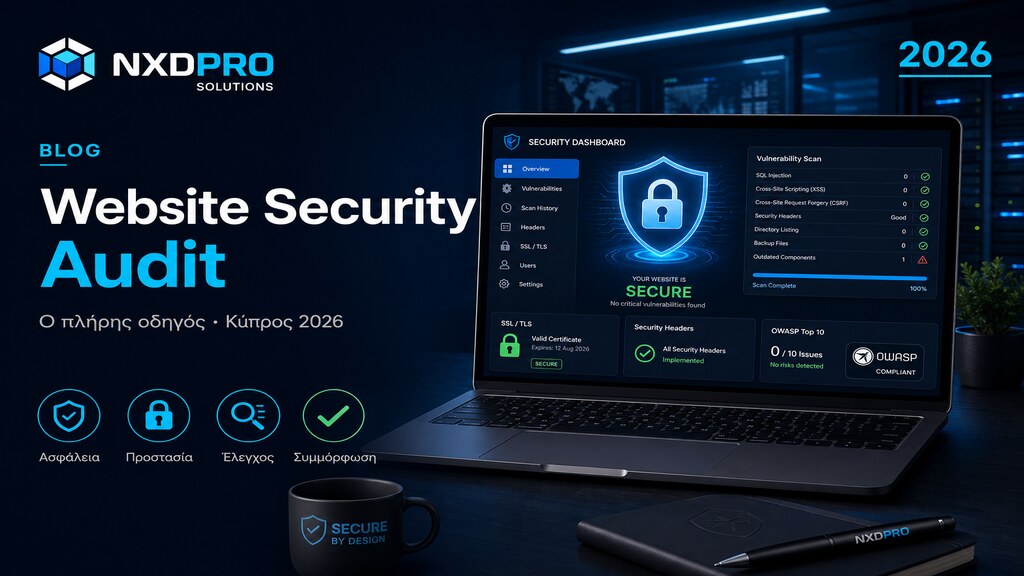
What a real audit checks
- Vulnerability scan — outdated CMS, plugins, themes and libraries.
- Malware & integrity — injected code, backdoors, spam.
- OWASP Top 10 — SQL injection, XSS, CSRF, broken access control and more.
- SSL/TLS — valid certificate, strong configuration, HTTPS everywhere.
- Security headers — HSTS, CSP, X-Frame-Options and others.
- GDPR & privacy — cookie consent, data handling, exposure.
- Backups & recovery — can you restore quickly if the worst happens?
Signs you need an audit now
- Your site runs WordPress/WooCommerce with plugins you rarely update.
- You handle customer data or take payments.
- You have never had a security review, or it has been over a year.
- You have seen strange redirects, spam pages or browser warnings.
What the process looks like
A typical audit takes 5–7 days: automated + manual testing, a prioritised report (critical → low) with clear fixes, and a re-check after remediation. Starting from €490.
Free first step
Start with our free tools — a quick site audit and security headers check — then go deeper with a full website security audit.
Not sure how exposed you are? Ask us for a quick risk check.